What to Do If Your Water Supply Is Cut Off
What you do next depends on what's actually happened — a full outage, low pressure, or a notice telling you to boil or stop using your tap water are three different situations with three different responses. Here's how to tell them apart, what your water company is required to do, and what compensation you may be entitled to.
First, work out what kind of interruption this is
These are treated differently, so it's worth being clear which one you're actually dealing with:
- No water at all — nothing comes out of any tap.
- Low pressure — water runs, but weakly, often just on upper floors.
- A boil water notice — water runs normally, but your supplier has told you to boil it first due to possible contamination.
- A "do not use" notice — rare, and more serious than a boil water notice; your supplier has told you not to use the tap water at all, even boiled.
If your water has stopped completely
Check whether it's just your property or a wider area first — a stopcock that's been accidentally turned off, or a burst pipe inside your own home, is your responsibility to fix, not your water company's. Check with a neighbour, or check your supplier's website or app, which will usually show live outages in your postcode.
If it's a wider outage:
- Report it to your water company and ask for an estimated restoration time.
- If you're on their Priority Services Register, tell them about any urgent needs — medical equipment, a new baby, or anyone in your household who's particularly vulnerable to going without water.
- Use stored water in the meantime. If you don't have any, ask whether your supplier is distributing bottled water, or setting up bowsers or standpipes, in your area.
Already storing water helps here
The first hours of an outage are exactly when stored water matters most, before any company response arrives. Our free calculator works out how much your household should have on hand, based on who's in it and how many days you want to cover.
Use the emergency water calculator →If you've received a boil water notice
Water suppliers issue these when there's a possibility — confirmed or suspected — that tap water contains bacteria, viruses, or parasites. According to the Drinking Water Inspectorate, the UK's independent drinking water regulator:
- Boil the water before drinking it, brushing teeth, preparing food, making ice, cleaning baby feeding equipment, or giving it to pets.
- Bring it to a rolling boil, then remove from heat and let it cool naturally.
- Store cooled boiled water in a clean container in the fridge, and discard anything not used within 24 hours.
- It's still safe to shower and bathe in (just avoid getting it in your mouth), wash dishes in hot water (dry thoroughly afterward), do laundry, and flush the toilet — all as normal.
Boiling works because most bacteria and viruses are killed well below 100°C, and boiling is also effective against parasites such as Cryptosporidium. Follow your own supplier's specific instructions over generic advice, since exactly what's affected can vary by incident.
If you've been told to stop using your water altogether
This is rarer and more serious than a boil water notice, and usually means an unexpected contamination that boiling wouldn't necessarily make safe (for example, a chemical contamination rather than a microbiological one). In this case, DWI guidance is to use bottled water or the alternative supply your water company provides, rather than your tap water in any form,
Worth having in before this happens to you
Compensation you may be entitled to
There are two separate mechanisms here, and it's worth not conflating them, since they apply in different circumstances. GSS figures below are the minimum household payments as set out by the Consumer Council for Water; England's standards were updated on 1 October 2025. Some companies pay more voluntarily. Scotland and Northern Ireland have their own schemes.
Guaranteed Standards Scheme (GSS) — routine service failures
| Situation | England (households) | Wales (households) |
|---|---|---|
| Supply not restored in time — initial payment | £50 | £20 |
| Supply not restored — each further period | £50 per full 12 hours (capped at twice your annual water supply charge) | £10 per full 24 hours |
| Not given notice of a planned interruption | £50 (48 hours' notice required) | £20 (24 hours' notice required; you must claim) |
| Low water pressure | £50 (up to 5 times a year) | £25 (once a year) |
Drought order compensation — a separate, distinct entitlement
If your essential household water supply (drinking, cooking, washing, or toilet flushing — not garden watering, car washing, or filling a pool) is interrupted specifically because of restrictions under an emergency drought order, you're entitled to £10 for each day or part-day it's interrupted, up to a maximum equal to your company's average household bill for the previous year. This sits outside the GSS and is a separate legal entitlement under your company's licence conditions.
Frequently asked questions
What should I do if my water supply is cut off?
First check whether it's just your property or the wider area, since a single-property fault (like a stopcock left off or a burst internal pipe) is your own responsibility, while a wider outage is your water company's. Contact your water company to report it and ask for an estimated restoration time. If you're on their Priority Services Register, tell them if you have urgent needs. Use stored water in the meantime, and if you don't have any, ask whether the company is providing bottled water or tankers in your area.
How long can water supply be cut off in the UK?
There's no fixed maximum, since it depends on the cause. Under the Guaranteed Standards Scheme, if your water company doesn't restore supply within the time it notified you of, you're entitled to a payment, with a further payment for each additional full 12 hours in England or full 24 hours in Wales. Separately, under the Security and Emergency Measures Direction, companies must be able to supply 10 litres per head within 24 hours of a failure, rising to 20 litres per head per day after day 5, until piped supply returns.
Am I entitled to compensation if my water is cut off?
Possibly, under the Guaranteed Standards Scheme (GSS). If your water company doesn't restore supply in time, households in England are entitled to £50 plus £50 for each further full 12 hours (standards updated 1 October 2025), and households in Wales to £20 plus £10 for each further full 24 hours. Separately, £10 per day applies when supply is interrupted due to an emergency drought order. Companies don't have to pay if severe weather conditions prevent their attendance or put staff at risk.
What do I do if I get a boil water notice?
Boil tap water before drinking it, brushing teeth, preparing food, or using it for pets, following the Drinking Water Inspectorate's guidance: bring it to a rolling boil, then let it cool naturally, and use within 24 hours if stored in the fridge. It remains safe to shower, bathe, wash dishes with hot water, do laundry, and flush the toilet as normal. If you're told to stop using the water altogether, rather than just boil it, use bottled water or the alternative supply your water company provides instead.
- Drinking Water Inspectorate — Receiving a Boil Water Notice — source for boil water notice guidance.
- Ofwat — Standards of service — source for GSS and drought-order compensation figures.
- Drinking Water Inspectorate — Security and Emergency Measures Direction (SEMD) — source for the 10L/20L per head planning obligation.
Minimum requirements for all
x140 Kirkland Water (500ml)
Drinking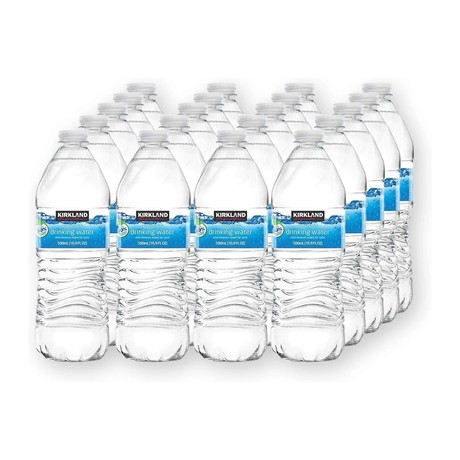
Purpose: cover your minimum drinking-water gap without a large storage footprint. 140 x 500ml bottles of natural spring water.
Inpress Plastics 5L Water Container
Drinking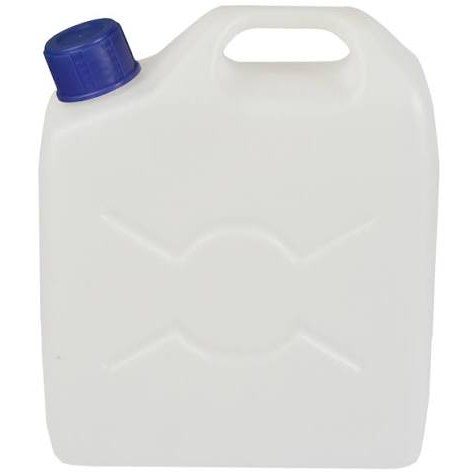
Purpose: efficient storage for larger gaps with limited cupboard space. Empty, refillable 5L container, food-quality polyethylene, rectangular shape for efficient stacking.
x10 Vira Safe Hand Sanitiser (500ml)
Hygiene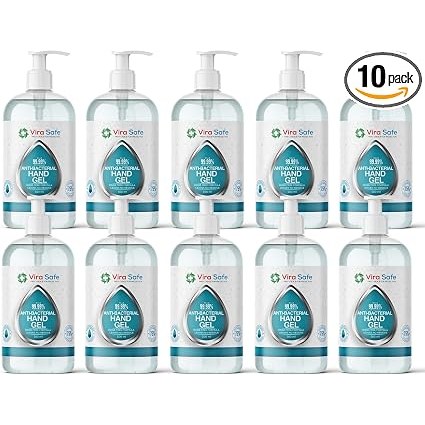
Purpose: basic hygiene cover when water is limited, per government guidance. 70% alcohol, UK-made, contains Vitamin E and Aloe Vera.