UK Emergency Water Storage: The Complete Guide
Once you know how much water you need, the next question is how to actually store it — what container, treated or untreated, where in the house, and how often to refresh it. Here's the practical detail, including one thing a lot of storage advice online gets wrong for UK households specifically.
Do you need to treat UK tap water before storing it?
No — and this is worth being clear about, since a lot of water storage advice online is written for a US audience where untreated well water is common, and routinely recommends adding a few drops of bleach before storage. That's not necessary here. According to the Drinking Water Inspectorate, water companies in England and Wales are legally required to disinfect tap water and maintain a residual chlorine concentration all the way through the pipe network to your tap.
Choosing the right container
Use food-grade containers only — ones actually designed to hold food or drink, not repurposed juice or milk bottles, which can retain proteins and sugars that encourage bacterial growth even after washing.
| Material | Notes |
|---|---|
| Food-grade HDPE plastic | Lightweight, widely available, what most dedicated water storage containers are made from. Look for a container specifically sold for water storage. |
| Glass | Doesn't absorb odours or leach anything into the water, but heavier and more fragile — better suited to smaller quantities. |
| Stainless steel | Very durable and inert, though typically more expensive for larger volumes. |
Choose opaque containers over clear ones where possible — light encourages bacterial and algal growth, which is part of why most dedicated water storage containers are deliberately non-transparent.
Where to store it
Somewhere cool, dark, and away from direct sunlight, petrol, paint, and household chemicals — plastics in particular can slowly absorb odours and chemical vapours from whatever's stored nearby. A cupboard under the stairs or in a spare room tends to work better than a garage or loft, both of which can swing between temperature extremes across the seasons in a way that isn't ideal for long-term storage.
Work out how much you actually need first
Before working out containers and space, it helps to know the target — our free calculator works out exactly how many litres your household should have on hand, based on who's in it and how many days you want to cover.
Use the emergency water calculator →How long it keeps, and rotating your stock
Commercially sealed bottled water can generally be kept until its printed best-before date. For anything you've filled yourself, there's no single official UK figure for how often to refresh it — this is genuinely one of those areas where UK guidance doesn't specify a number. A widely followed precaution is roughly every 6 months, sooner if storage conditions are warm. Whatever schedule you choose, the more reliable check is your senses: if stored water ever looks cloudy, smells unusual, or tastes off, don't drink it, regardless of how recently it was filled.
Storing non-drinking water separately
Water for flushing the toilet, basic cleaning, or washing doesn't need the same food-grade standard as drinking water, and it's worth keeping the two clearly separate and labelled so nobody mistakes one for the other. A water butt is a common source for this kind of non-drinking water — but it should never be used for drinking or cooking, since collected rainwater can carry bacteria or contamination that isn't appropriate for consumption.
If your stored water needs treating
If you're ever in a position where you need to treat water of uncertain quality — not your own sealed stock, but water from an alternative source during an actual supply issue — the Drinking Water Inspectorate's boiling guidance is the standard approach: bring it to a rolling boil, then let it cool naturally before use. This is also what's recommended during an official boil water notice — see our Containers and backup filtration worth having
Frequently asked questions
Do I need to treat UK tap water before storing it?
No. Water companies in England and Wales are legally required to disinfect tap water and maintain a residual chlorine concentration all the way to your tap, according to the Drinking Water Inspectorate. This is different from some other countries' advice, which often assumes untreated well water and recommends adding bleach. Simply store UK tap water in a clean, sealed, food-grade container with no need to treat it first.
What's the best container for storing emergency water?
Food-grade containers only, ideally opaque rather than clear, since light can encourage bacterial or algal growth. Food-grade HDPE plastic, glass, and stainless steel are all suitable, provided the container was designed to hold food or drink rather than repurposed from something else, such as a juice or milk bottle.
How often should I rotate stored water?
There's no single official UK figure for this. A widely followed precaution is to refresh self-filled water roughly every 6 months, sooner if it's stored somewhere warm, and to follow the printed best-before date on commercially bottled water. If stored water ever looks cloudy, smells unusual, or tastes off, don't drink it, regardless of how recently it was filled.
Can I store drinking water and non-drinking water the same way?
No, and it's worth keeping them clearly separate. Drinking water needs food-grade containers and more careful rotation. Non-drinking water, for flushing the toilet or basic cleaning, doesn't need to be food-grade and can include sources like a water butt, which should never be used for drinking or cooking.
- Drinking Water Inspectorate — Chlorine in your water — source for the legal disinfection requirement covering UK tap water.
- Drinking Water Inspectorate — Receiving a Boil Water Notice — source for boiling guidance.
Minimum requirements for all
x140 Kirkland Water (500ml)
Drinking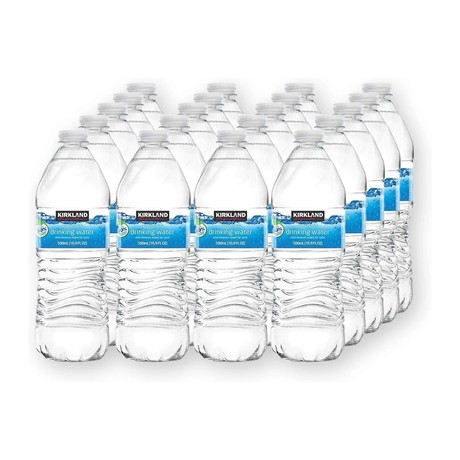
Purpose: cover your minimum drinking-water gap without a large storage footprint. 140 x 500ml bottles of natural spring water.
Inpress Plastics 5L Water Container
Drinking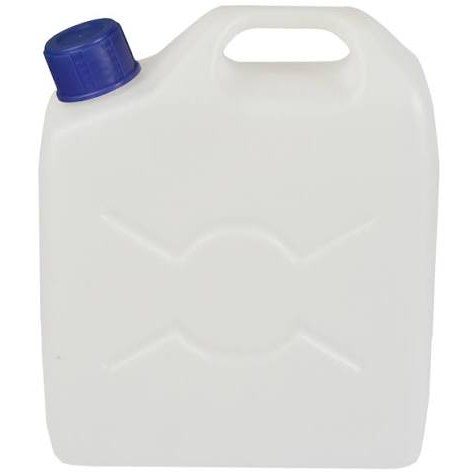
Purpose: efficient storage for larger gaps with limited cupboard space. Empty, refillable 5L container, food-quality polyethylene, rectangular shape for efficient stacking.
x10 Vira Safe Hand Sanitiser (500ml)
Hygiene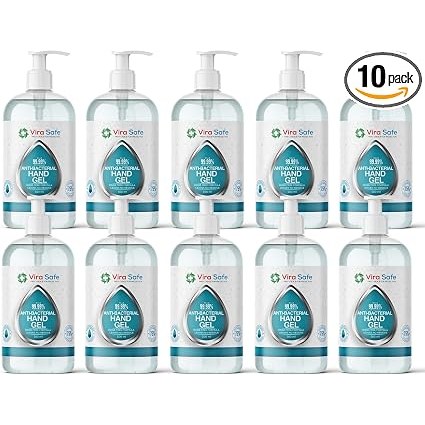
Purpose: basic hygiene cover when water is limited, per government guidance. 70% alcohol, UK-made, contains Vitamin E and Aloe Vera.